
Last updated November 21, 2026
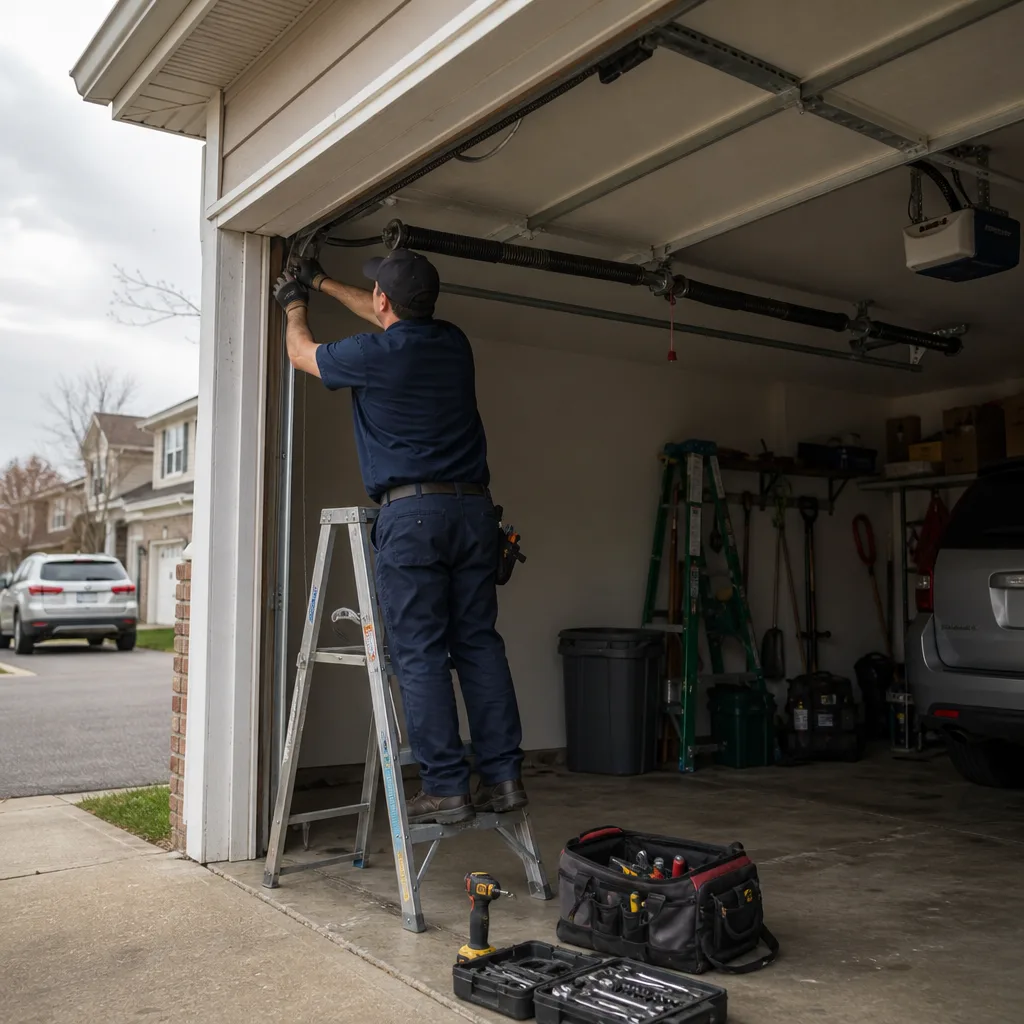
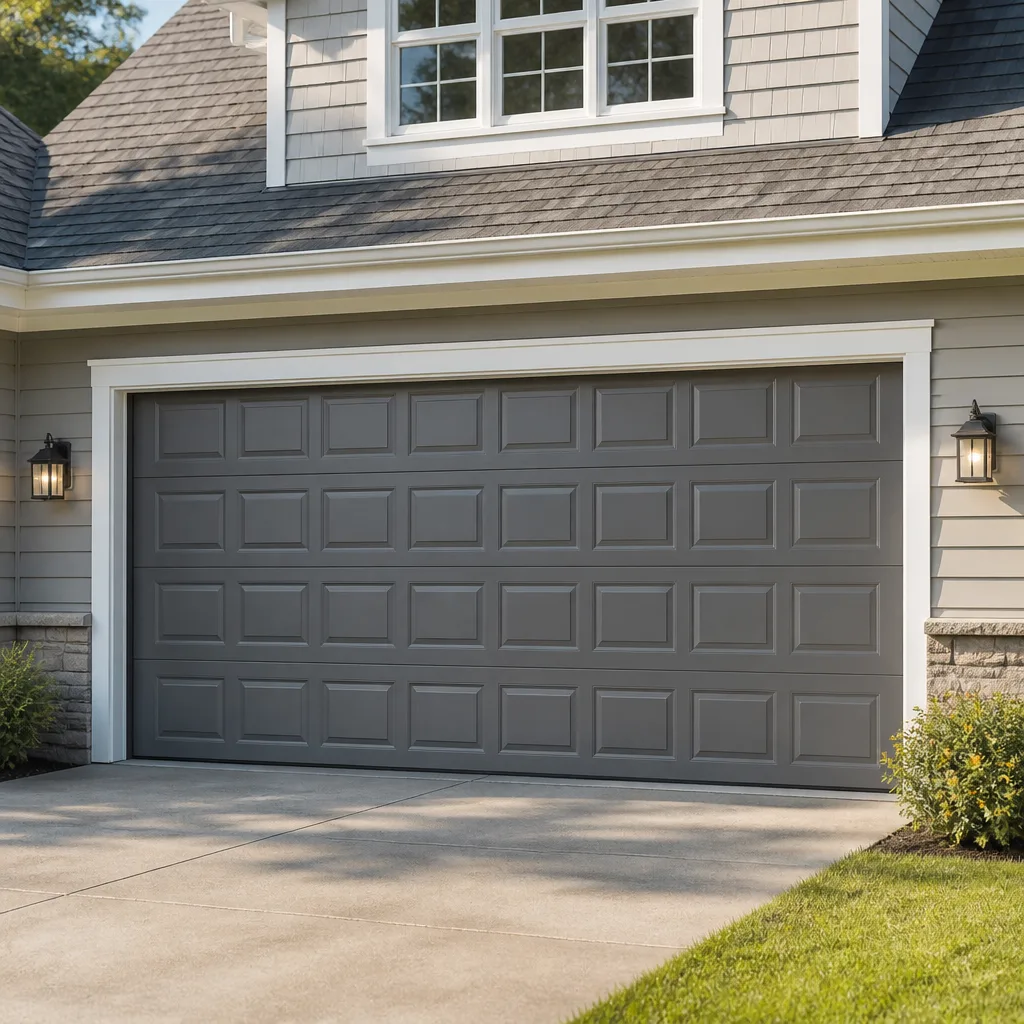 Raised-panel steel
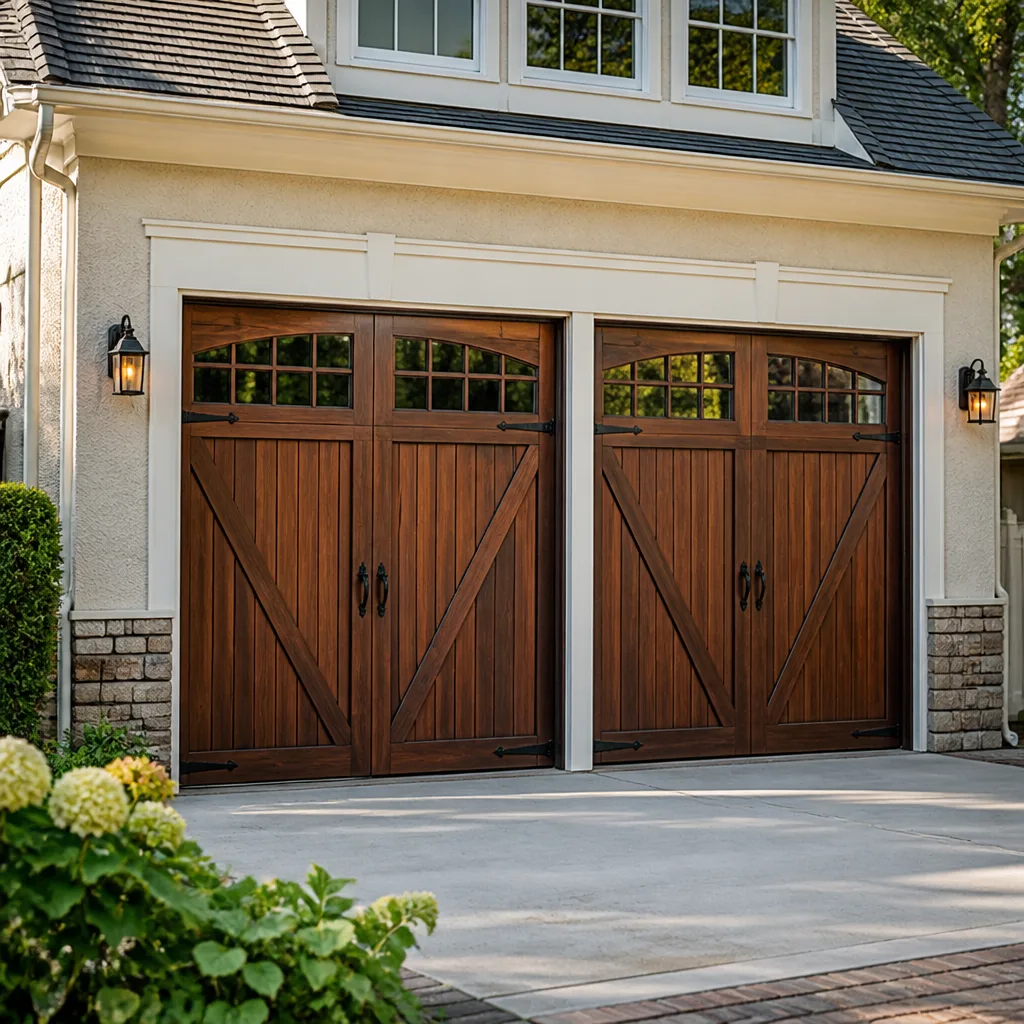 Carriage house
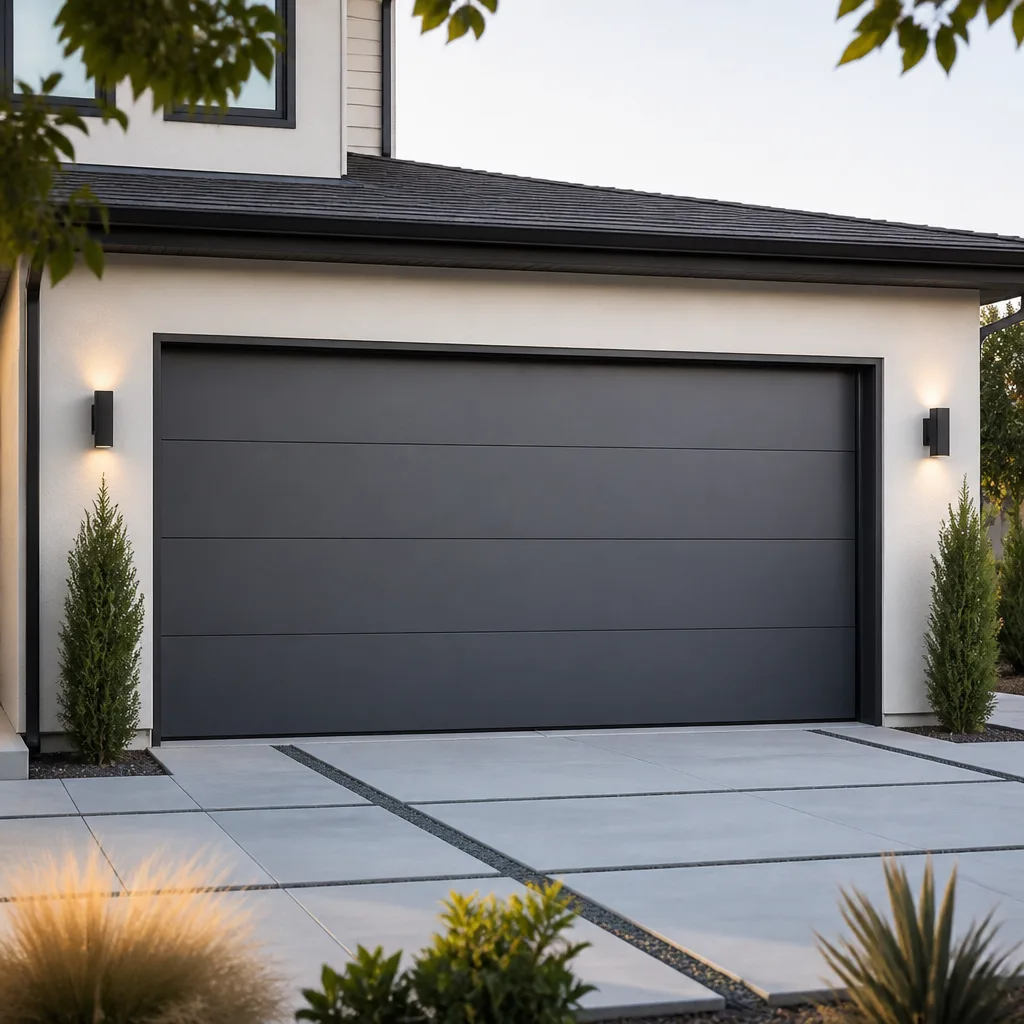 Modern flush
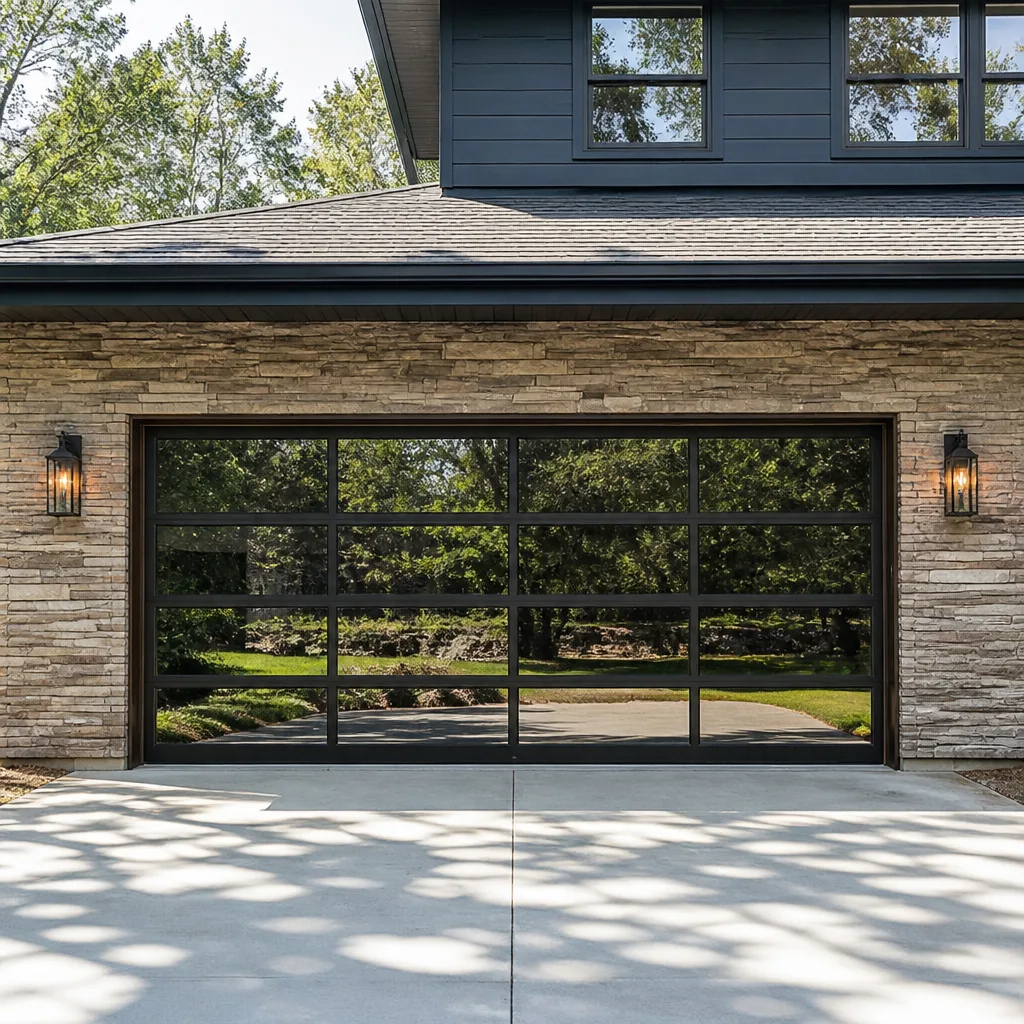 Full-view glass
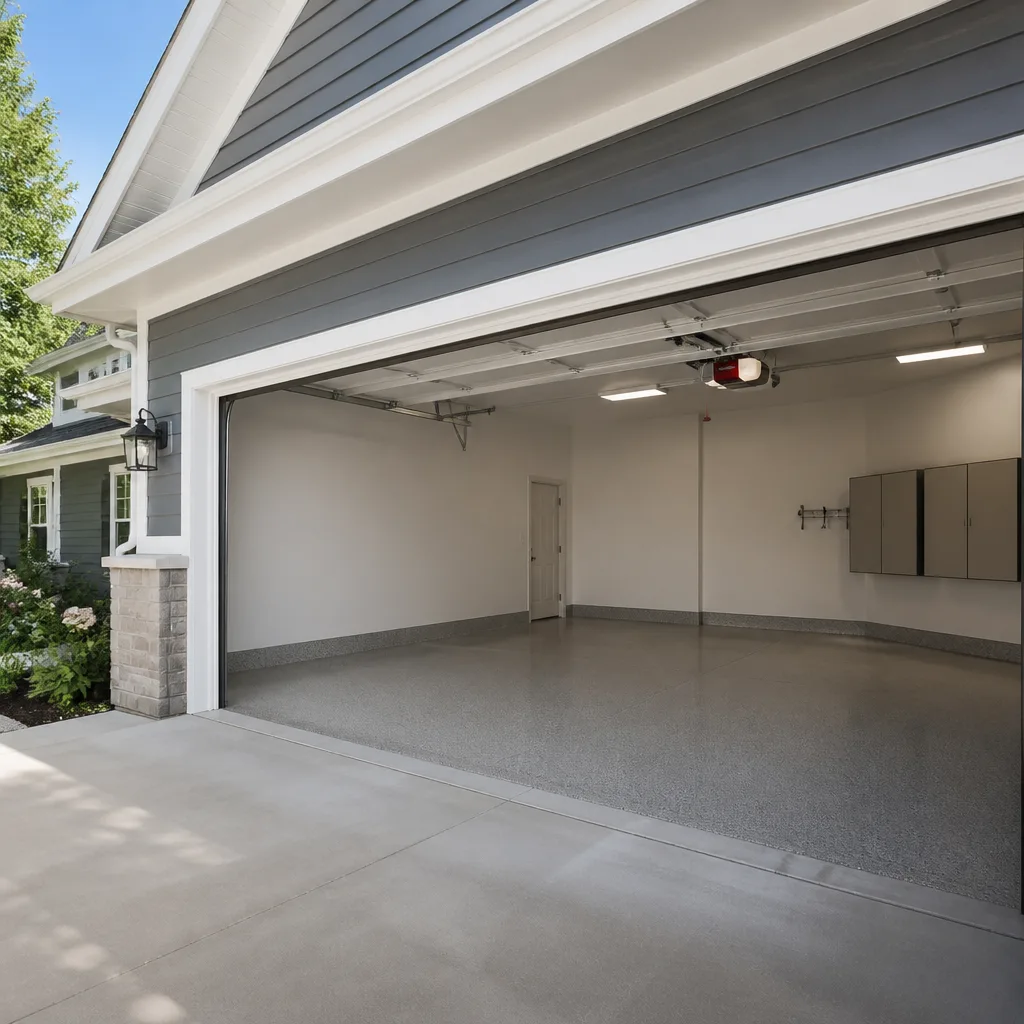 LiftMaster openers
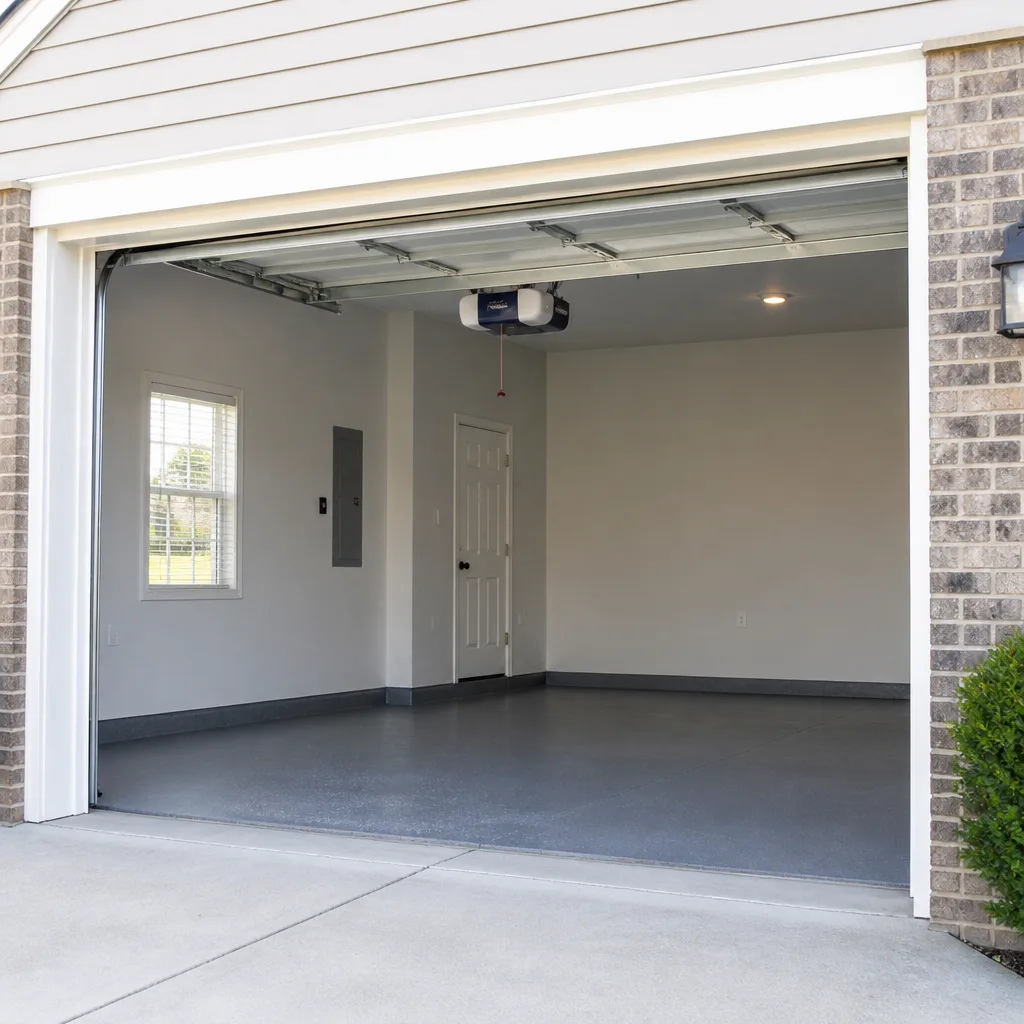 Chamberlain openers
Full 25-point door and opener safety check with every visit - springs, cables, rollers, tracks, and your LiftMaster or Chamberlain opener included
You get a price before we start. It does not change when the pro arrives.
Get your free estimateChoosing the Right Garage Door Brand: A Buyer’s Guide for West Side
Most homeowners pick a garage door the way they pick a paint color: whatever the person standing in their driveway recommends that afternoon. That’s a problem, because the brand an installer pushes hardest is often the one with the fattest margin, not the one that lasts longest in New Jersey weather. In West Side, where humid summers and freeze-thaw winters work steel, insulation and finish coatings hard, the brand matters more than the color swatch. This guide shows you how to evaluate the major brands on the specs that actually decide longevity, how to read a warranty before it’s printed on your contract, and why local parts availability should factor into your choice as much as curb appeal. We install and repair doors here, so we’ll tell you what we look at.
Quick Answer
The best garage door brand in West Side depends on which specs you weight, but for most homes here the shortlist runs to Clopay, Amarr, Wayne Dalton and Raynor, judged on steel gauge, insulation R-value and finish coating rather than showroom finish. Choose the brand your repair technician can source parts for quickly, and read the warranty exclusions before you sign. A well-specified mid-tier door from a well-distributed brand usually outlasts a top-tier door from a brand nobody locally stocks parts for.
Styles & brands we work with
- Raised-panel steel
- Carriage house
- Modern flush
- Full-view glass
- LiftMaster openers
- Chamberlain openers
Table of Contents
- How Do the Major Brands Actually Compare in New Jersey Conditions?
- Why Does Local Parts Availability Matter So Much?
- What Do Garage Door Warranties Actually Cover?
- Steel Gauge, R-Value and Finish Coating: The Three Specs That Matter
- How Do You Match Door Style to West Side Architecture?
- Does Your Opener Brand Affect Your Door Choice?
- Seven Steps to Choosing the Right Brand for Your Home
- Common Mistakes to Avoid
How Do the Major Brands Actually Compare in New Jersey Conditions?
No single brand wins every category. Clopay, Amarr, Wayne Dalton and CHI all sell doors that perform well in West Side, but they lead in different specs, and knowing where each one is strong saves you from paying for a feature that doesn’t suit your home. West Side’s climate asks a lot of a door: humid summers that stress finish coatings, winter freeze-thaw that works on seams and hardware, and strong seasonal sun on south- and west-facing walls.
Here’s how we see the four brands most often installed here break down:
- Clopay – wide insulation range across its lines, strong finish options, and broad distribution, which makes parts easy to source when something wears out.
- Amarr – solid steel construction and a good balance of insulation and price; commonly specified in the mid-market range.
- Wayne Dalton – dependable across a long catalog, particularly strong for homeowners who want a wide style choice without stepping up to the top tier.
- CHI – a reputation for heavier-gauge steel and finish coating quality in its better lines, worth comparing against the big three on corrosion resistance.
What we look at first is not the badge on the door but the gauge of the steel, the insulation specification and the finish. A brand that publishes those clearly is usually the one with nothing to hide. When you’re comparing, put the spec sheets side by side and ignore the brochure photography. For a full picture of how we approach new doors, see our garage door installation capability.
Why Does Local Parts Availability Matter So Much?
A garage door isn’t a single object; it’s a system of panels, torsion or extension springs, cables, rollers, hinges, tracks and an opener. Every one of those wears out or breaks eventually. When a spring snaps or a roller seizes, the question that decides how long your door stays down isn’t which brand looks best but whether the part is available locally and affordable. A brand with thin distribution in your area can turn a same-day repair into a week of waiting, or turn a $40 roller set into a special order.
Here’s what to ask before you buy any brand:
- Which of the mainstream brands does my local repair technician actually service? If the answer is “we can work on anything,” push for specifics.
- Can the installer name the parts supplier for this brand, and is that supplier regional or national?
- Are springs, rollers and hinges for this door standard sizes or proprietary? Standard wins for repair speed.
- Is the opener for this door from a widely supported line, or a niche model with limited parts?
This is where our factory-trained compatibility with eight major brands – LiftMaster, Chamberlain, Genie, Clopay, Amarr, Wayne Dalton, Craftsman and Raynor – pays off for West Side homeowners. We work on those systems specifically, so when a door we’ve installed needs a part, there’s a known route to it. It’s also why we’re cautious about a door whose distribution in New Jersey is thin. For day-to-day fixes, our garage door repair pages cover what we handle.
What Do Garage Door Warranties Actually Cover?
Garage door warranties look generous on the front page and get narrow in the fine print. Most split into three separate warranties with very different terms: one for the door sections (the panels), one for the hardware (springs, hinges, rollers, cables), and sometimes one for labor. The sections warranty is often the longest, sometimes decades long, but it’s also the least likely to be used, because panels rarely fail in the way the warranty covers. The hardware warranty is usually far shorter and carries the exclusions that actually matter.
Here’s what to check line by line:
- Prorating – many warranties pay a declining percentage of the part cost over time, so a “limited lifetime” claim can shrink to a fraction after several years.
- Labor exclusions – the part may be covered, but the labor to fit it often isn’t. That’s the larger cost in most repairs.
- Finish coverage – finish and paint warranties often exclude fading they call “normal” and damage from weather or salt. If finish durability matters to you, read this clause closely.
- Springs and moving parts – springs on most doors are treated as wear items with a short coverage window. Don’t assume the door warranty covers the spring.
- Voiding conditions – improper installation, missing maintenance or third-party modification can void coverage. Keep the install paperwork.
A warranty is only as good as the installer behind it, because exclusions multiply when the door was fitted badly. Ask for a written copy before you sign, not after.
Steel Gauge, R-Value and Finish Coating: The Three Specs That Matter
If you want a rule of thumb for West Side, judge every door on three specs: steel gauge, insulation R-value and finish coating. Those three decide how the door holds up against humidity, heat and cold, and how well it insulates an attached garage that may share a wall with your living space.
Steel gauge. Garages in West Side see long, damp summers and cold winters, and thinner steel dents, dings and flexes more readily. A thicker gauge is heavier and stiffer, and holds dents better, but check that the opener and springs are sized for the weight. Match gauge to how exposed the door is: a west-facing door takes more heat and sun than one set back under an overhang.
Insulation R-value. A garage attached to the house benefits from an insulated door because that shared wall matters. Non-insulated doors are fine for a detached, unheated garage. Between the two you’ll find a spread of insulation performance across the brands, and the specification on the door you’re looking at will tell you where it sits. Ask for the R-value in writing.
Finish coating. This is the spec homeowners skip and later regret. A good factory finish resists fading, chalking and moisture far better than a thin coat. It’s the main defense against rust on the edges and hardware, not the door face. Ask what coating is applied, whether it’s a baked-on finish, and what the finish warranty actually says. Between these three specs, you can compare doors across brands without getting lost in styling.
How Do You Match Door Style to West Side Architecture?
West Side’s housing is a mix: older homes with carriage-style garages, mid-century ranches, and more recent builds with attached two-car bays. The door style should sit comfortably against the house, but the specification should still carry the performance. It’s possible to have both, if you order the style you want in the construction that suits the climate.
Here’s how we think about the match:
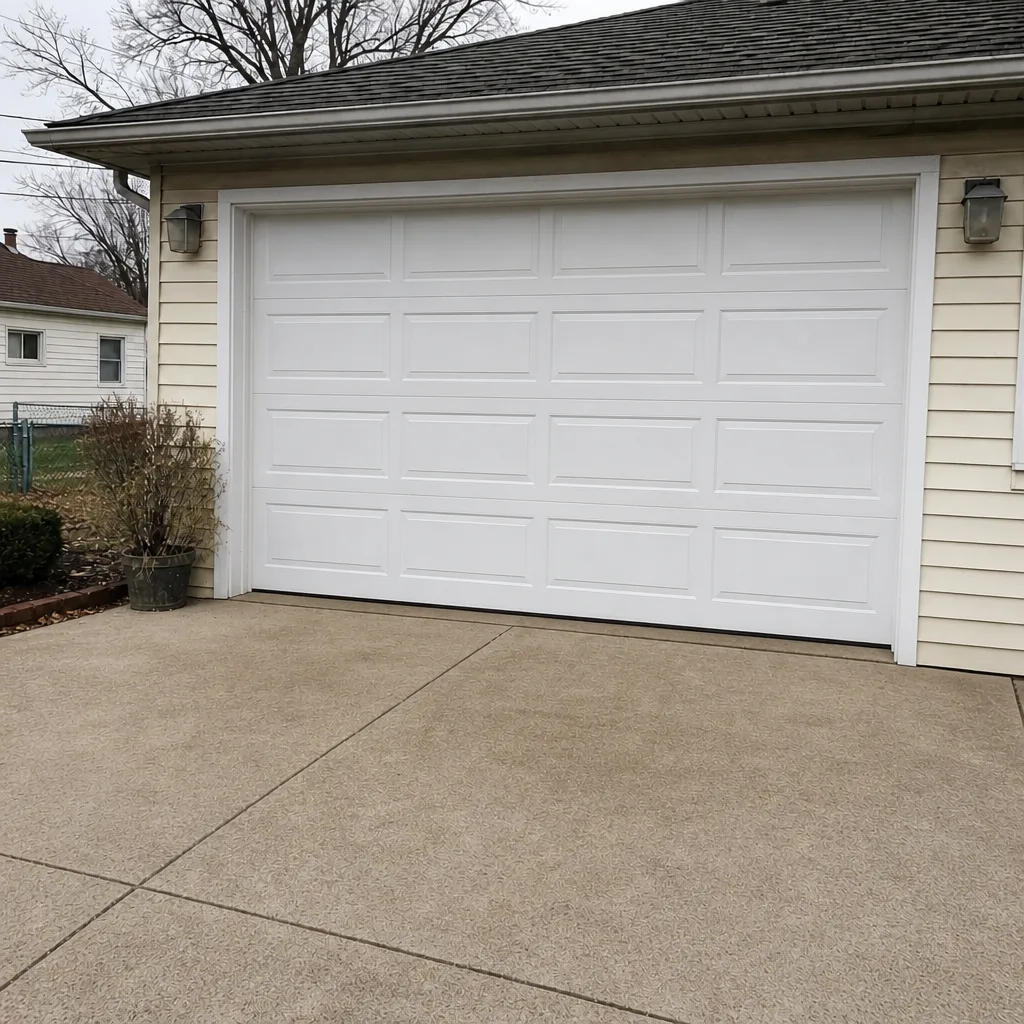
- Traditional raised-panel steel doors – the versatile default. They suit most homes in West Side and are usually the broadest specification range across brands.
- Carriage-house or stamped carriage panels – a good fit for older homes with gable or hip roofs; the decorative hardware is cosmetic and easy to replace if it rusts, so don’t overpay for premium trim.
- Contemporary full-view or glass doors – they look sharp on newer builds, but glass panels and aluminum frames need care in humid cycles, so check the frame finish and insulation.
- Flush or ribbed panel doors – practical and durable, good for a home where the garage sits at the front of the facade.
Don’t let the style drive the spec. Order the style you want in a construction that meets the gauge, R-value and finish criteria above. Curb appeal fades; a door that doesn’t hold up to New Jersey weather doesn’t. When you’re ready, our garage door repair team can talk you through whether your current door is worth keeping or replacing.
Does Your Opener Brand Affect Your Door Choice?
Your opener matters because it has to carry the weight and force of the door you choose, and because a smart-home setup only works if the opener brand is well-matched. The dominant smart-home ecosystems here are LiftMaster and Chamberlain’s myQ. If you want app control, Wi-Fi connectivity and voice-assistant integration, choosing an opener from those brands keeps things simple. Legacy systems like Craftsman and Genie are still common in West Side garages, and we work on those as well, so you don’t have to replace a working opener just to get the right door.
What to think about before you order a door:
- Is your existing opener rated to lift the weight of the door you want? A heavier insulated door can need a stronger opener or a torsion spring change.
- Does the opener brand have smart-home support, or is it a legacy mechanical unit? Decide whether you want connectivity.
- If you’re keeping the opener, is it compatible with the new door’s weight and travel requirements?
- Is the opener itself healthy, or is it on its last legs? It’s cheaper to address opener issues at install than after.
For any opener fault, see our garage door opener repair service. We cover both modern connected systems and older mechanical failures.
Seven Steps to Choosing the Right Brand for Your Home
Here’s a repeatable process – use it whether you’re replacing a single panel or a whole door in West Side.
- Measure the opening and note the headroom. Any reputable brand has doors that fit a standard opening, but headroom and sideroom decide which spring type and opener will work.
- Write down the three specs. Note steel gauge, R-value and finish coating for at least three brands, side by side.
- Check local parts availability. Ask which local suppliers carry the brand and which brands your repair technician services.
- Read the warranty exclusions. Focus on prorating, labor exclusions and the finish and spring clauses.
- Match the door style to your home. Pick a style that fits the house, then confirm the performance spec is met.
- Confirm the opener plan. Decide whether to keep the existing opener or replace it, and confirm it’s rated for the new door.
- Get it in writing. Free estimate, written specification and an itemized quote before any work starts. No surprises.
These steps take most homeowners an evening with the spec sheets. It’s time well spent, because a door in West Side is a decade-long commitment.
Common Mistakes to Avoid
- Buying the brand the installer pushes hardest. Ask what specifically makes that brand right for your home, and whether it’s a brand the installer can source parts for. If the answer is vague, get a second opinion.
- Ignoring the finish warranty. A door that looks great on day one can fade or chalk quickly if the finish coating is thin. In West Side’s humid summers, that finish is doing more work than the door face.
- Choosing a brand with thin local distribution. A slow parts supply turns a small repair into a long wait. Even a great door is only as good as the speed of its repairs.
- Skipping the opener compatibility check. An opener rated for a light door can struggle with a heavy insulated one. Match the two at the planning stage.
- Judging by price alone. A cheap door with a weak finish and thin steel costs more over its life. Compare on gauge, R-value and coating.
- Assuming a lifetime warranty covers springs and labor. Springs are usually a short-term wear item, and labor is often excluded. Read the clauses.
- Ordering a door that doesn’t fit your architecture. Style should follow the house; performance should follow the climate. Get both or you’ll regret one.
See the difference
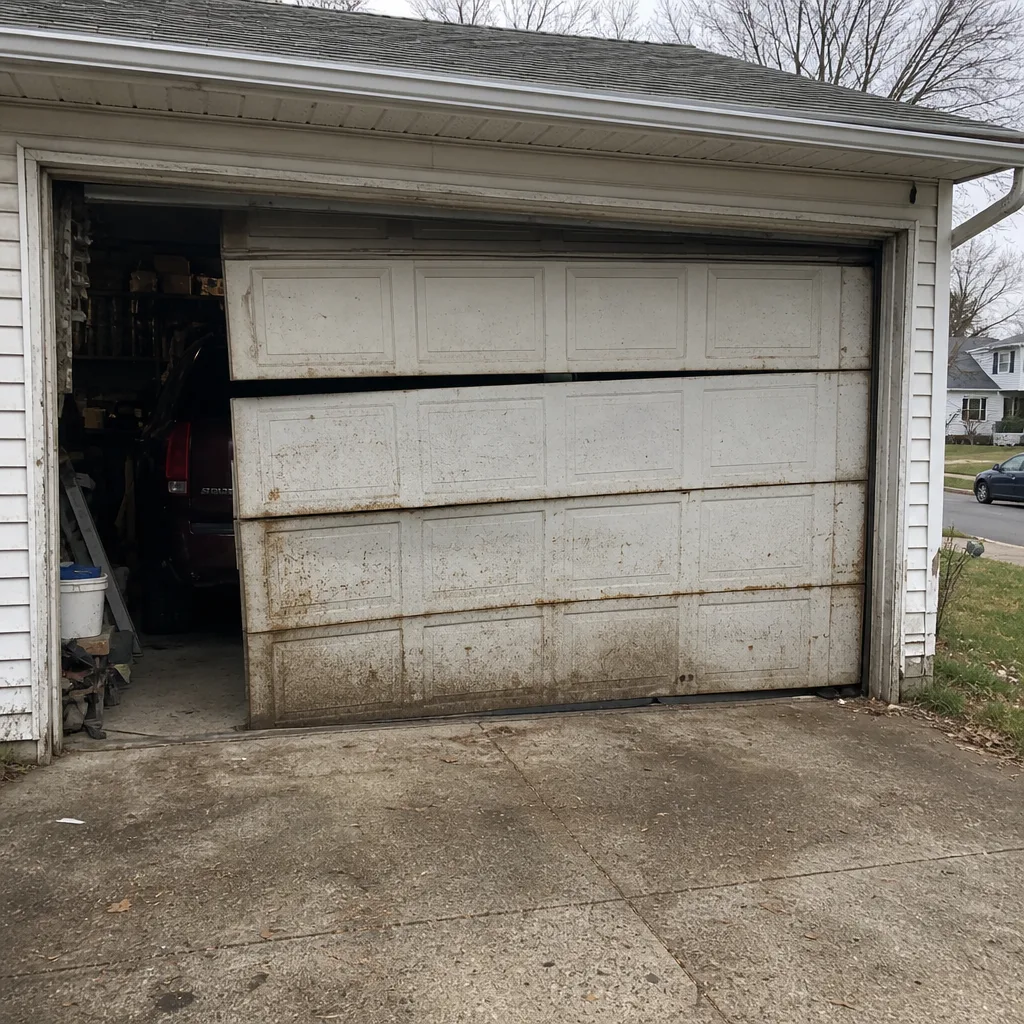 Before
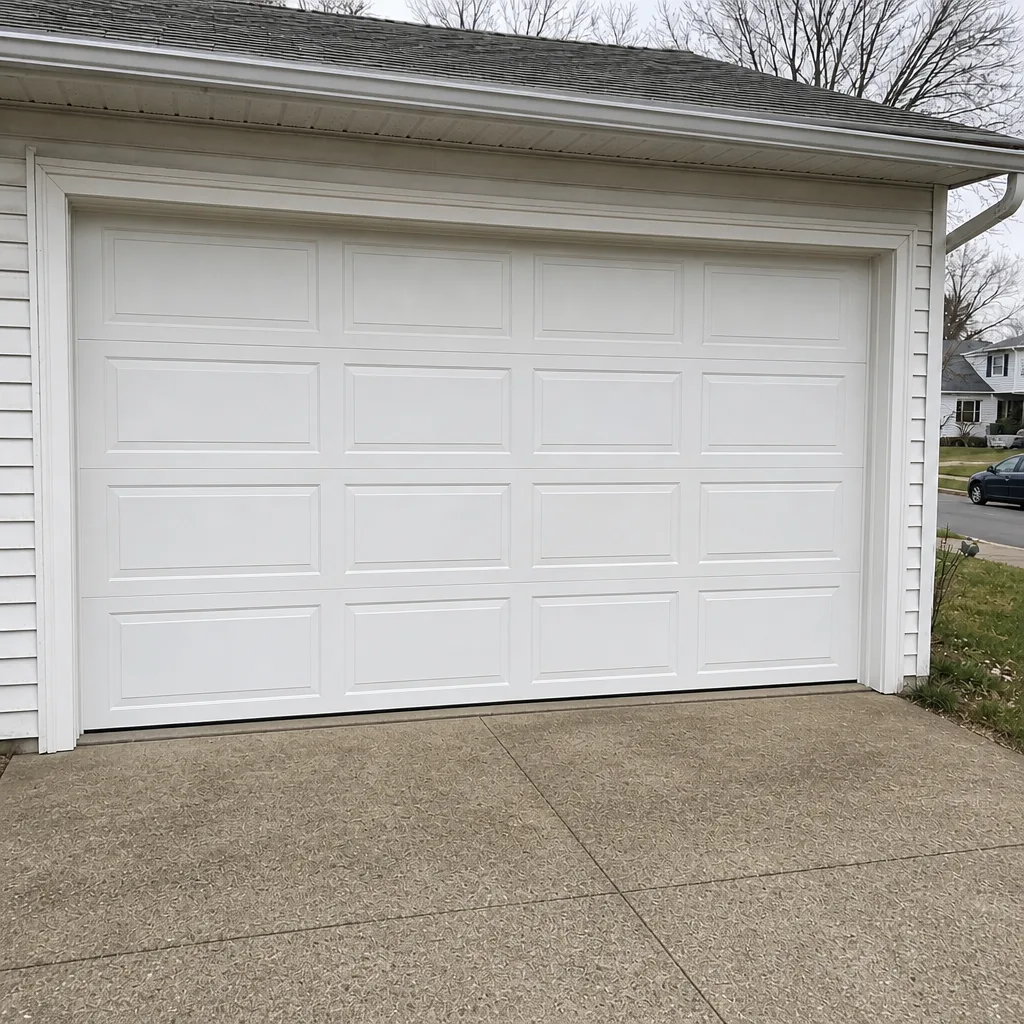 After
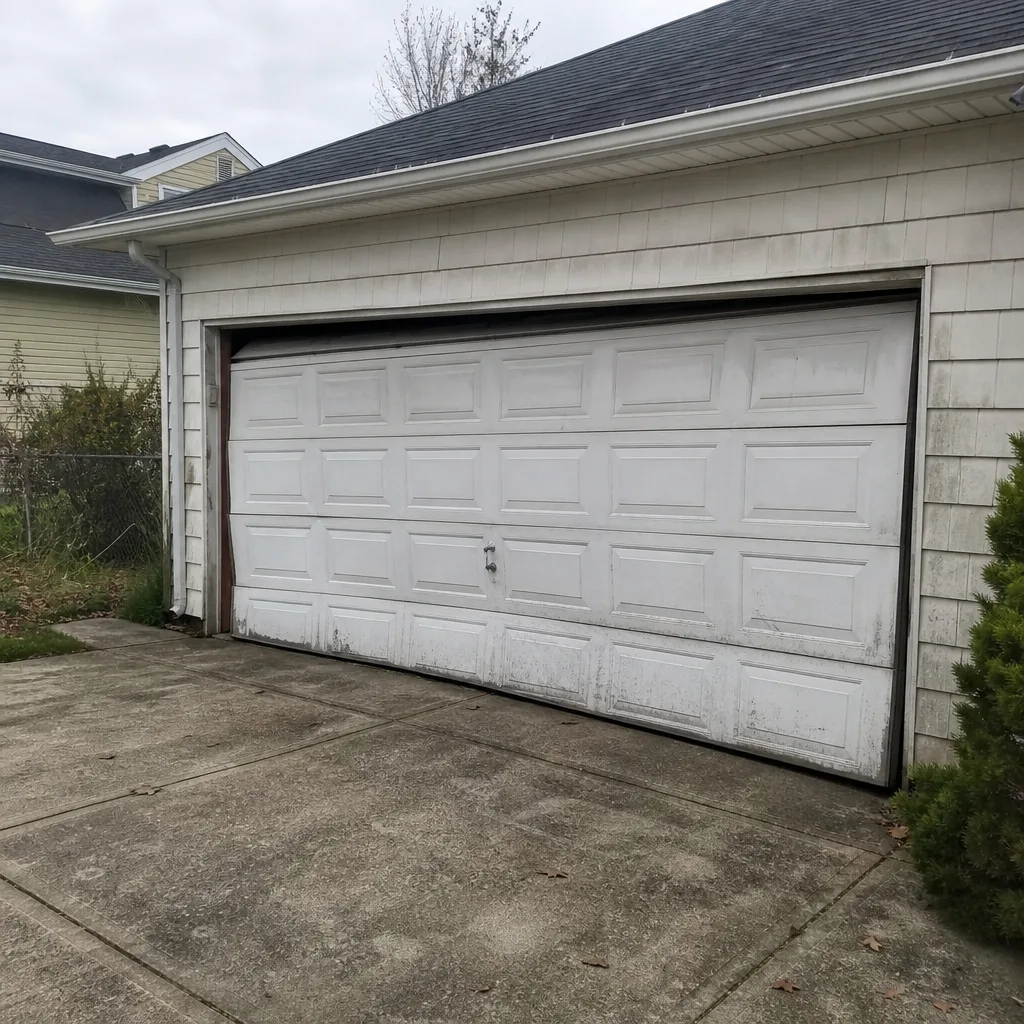 Before
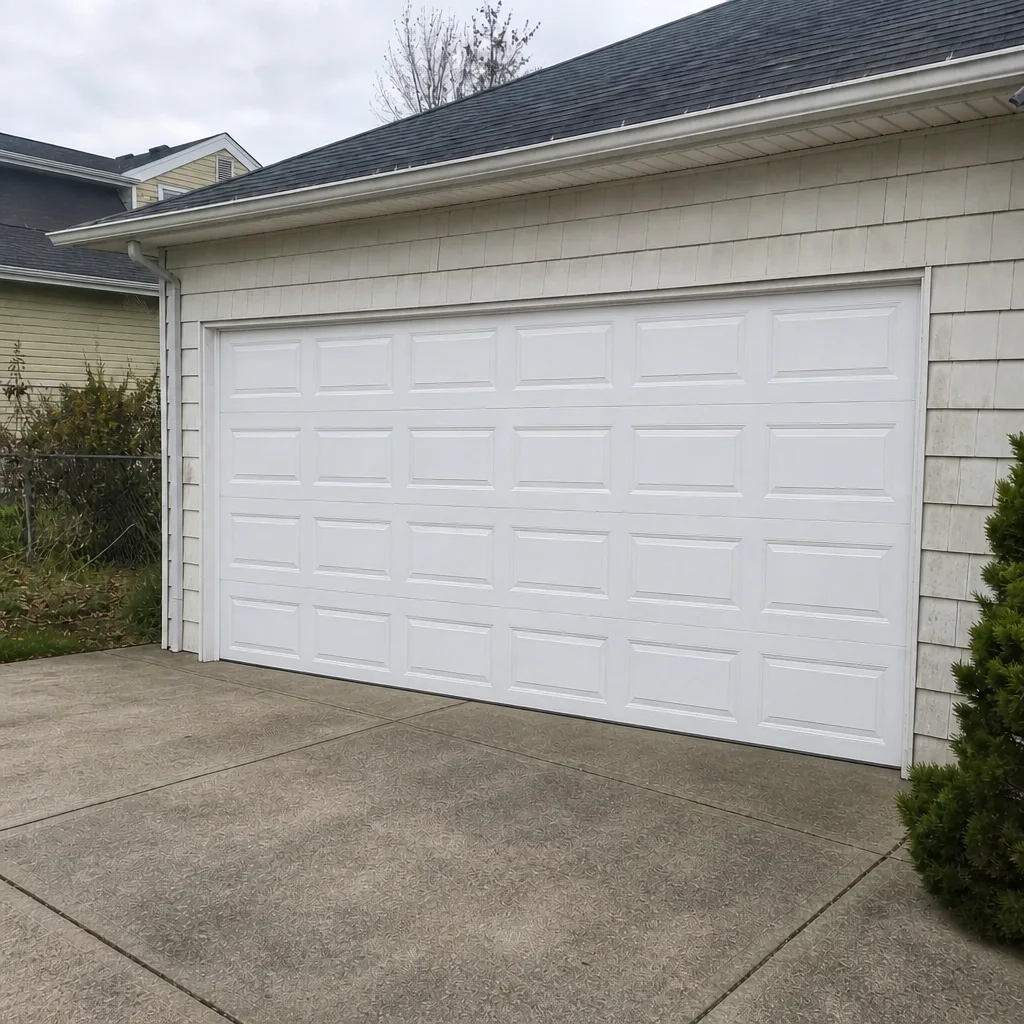 After
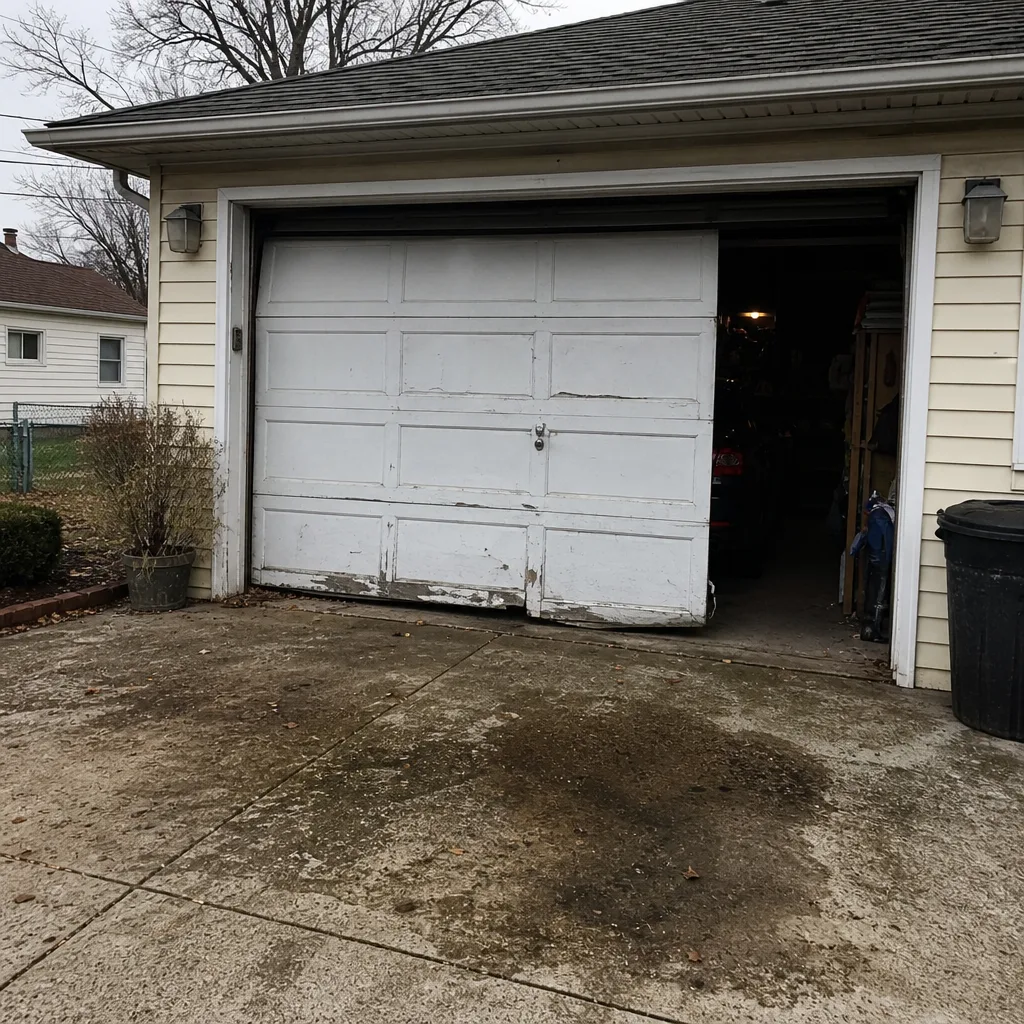 Before
 After
When to Call a Professional
Brand selection is a planning job, but some situations push you toward a professional right away. A door that’s off its track, a snapped spring, a door that won’t close or open, a cable that’s come loose – these are not a brand question, they’re a repair. High-tension torsion and extension spring work is dangerous; leave it to trained technicians. Opener problems, a door that shudders or binds, and panels that have been damaged in a storm also call for an inspection before you buy anything. In our experience, a professional assessment before purchase often reveals whether you need a new door or a repair. Garage Door Repair West Side offers free estimates in West Side. Call (855) 963-4043. We answer 24/7. Fast dispatch from 7am to 7pm, Sunday through Friday. We also offer emergency garage door service for doors that can’t wait.
Frequently Asked Questions
For most homes in West Side, the shortlist is Clopay, Amarr, Wayne Dalton or Raynor, judged on steel gauge, insulation R-value and finish coating rather than brand name alone. The best pick for your house depends on your opening size, insulation needs and which brands your repair technician can source parts for. Compare them side by side on the three specs, then choose the door style you like from the brand that meets the spec.
Because a garage door’s components wear out and break over time, and the speed of repair depends on whether parts are available locally. A brand with thin distribution can turn a small job into a long wait or a special order, raising your cost over the life of the door. Before you buy, check which brands the repair technician services and where parts come from.
Most warranties are split into sections (panels), hardware (springs and moving parts) and sometimes labor, with the sections often the longest but least likely to be used. Hardware, spring and finish warranties are usually shorter and carry the key exclusions: prorating, labor costs, and weather or finish fading. Read those clauses before you sign, and keep the install paperwork. Call (855) 963-4043 for a free estimate and a written specification.
Choose a style that fits the house, then confirm the construction meets the three specs: steel gauge, R-value and finish coating. In West Side, traditional raised-panel and carriage-house doors suit the older homes, while contemporary doors suit more recent builds. Don’t let the style drive the specification; order the style you want in a construction that holds up to New Jersey’s humid summers and cold winters.
Cost depends on door size, brand, gauge and insulation, so it’s not a single number. Request a free estimate with a written quote for your specific opening and brand. The price is quoted and agreed before any work starts. Call (855) 963-4043 for a free estimate.
Yes, because the opener must be rated to lift the new door’s weight. A heavier insulated door may need a stronger opener or a spring change. If you want smart-home control, LiftMaster, Chamberlain’s myQ and similar brands offer connectivity, and we work on those alongside legacy Craftsman and Genie systems. Choose the door first, then confirm the opener can carry it. Call (855) 963-4043 for a free estimate.
The Bottom Line
The right garage door brand for your West Side home comes down to specs, not showroom styling or installer opinion. Judge every candidate on steel gauge, insulation R-value and finish coating, read the warranty exclusions closely, and factor in local parts availability. That combination protects you from a door that looks good on day one but becomes hard to repair and expensive to maintain. Clopay, Amarr, Wayne Dalton and Raynor are all solid choices when specified correctly, and matching your opener brand to the new door is part of the planning, not an afterthought. When you’re ready for a free estimate in West Side, call (855) 963-4043. We answer 24/7. Fast dispatch from 7am to 7pm, Sunday through Friday. If you’d like to start with the full picture of what we do, this is Garage Door Repair West Side.
Written by the team at Garage Door Repair West Side.